Professional kitchen equipment / B2B pricing / AI-assisted product selection
ECATERSTORE
Shopping Cart 0
Loading cart…
SOLUTION // DISHWASHING-LINE

From undercounter to conveyor — sized for your throughput.

Choose the right machine for racks/hour, water + chemical consumption, and floor footprint.

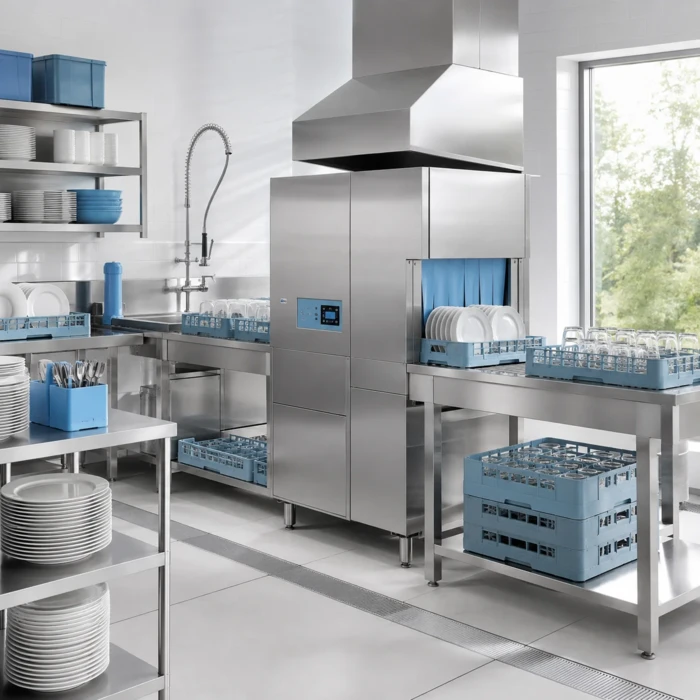
High-capacity dishwashing
AI ASSIST

What's your peak racks/hour?

Tap one — our AI agent opens with a recommendation tailored to that setup.

RECOMMENDED WORKFLOW

From dough to plate

Scrape + pre-wash

Soiled side: pre-rinse sink, scraping table, rack staging.

SETUP LEVELS

Pick the scope that fits

FREQUENTLY ASKED

Common questions

How do I calculate racks/hour?
Peak covers × 1.5 (plates+cutlery+glasses) ÷ 18 (items per rack) = racks needed in the peak hour. Add 20% safety. Example: 200-cover lunch ÷ 90 min = 134 covers/hr peak → ~11 racks/hr → undercounter fine, hood comfortable.
Single-phase vs three-phase electrical?
Undercounter = single-phase 230V usually fine. Hood and pass-through = three-phase 400V is standard (faster heat recovery between cycles). Conveyor = always three-phase. Confirm your site has three-phase before ordering anything beyond undercounter.
Water consumption — does it matter?
Yes, especially with Irish water charges + heating costs. Modern undercounter = 2.4 L/rack; hood = 2.8 L/rack; conveyor = 100-200 L/hour at full speed. Choose machines with water recovery (heat exchanger on rinse water) for 15-20% energy saving.
Choosing the right commercial dishwasher is mostly arithmetic: peak racks/hour vs machine rated capacity, with 20% safety margin. Below 30 racks/hr → undercounter. 30-60 → hood. 60-120 → pass-through. 120+ → rack conveyor. Beyond 200 → flight (conveyor with belt). Match it wrong and you'll have wet glasses at peak service every night.